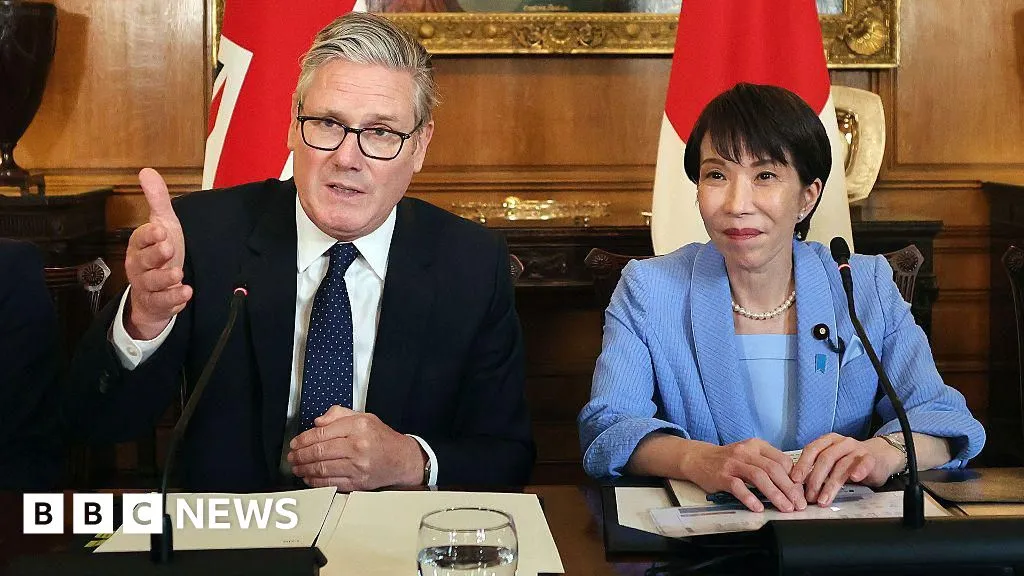
The United Kingdom and Japan have solidified a transformative £18 billion investment agreement, marking a significant milestone in bilateral relations and promising tens of thousands of job opportunities amid a challenging economic landscape. This deal was announced as UK Prime Minister Sir Keir Starmer met with Japanese Prime Minister Sanae Takaichi in London, emphasizing a "new era of cooperation" between the two nations.
Under this accord, Japanese companies are poised to invest over £9 billion in UK infrastructure and financial services while allocating an additional £9 billion towards developing offshore wind energy capabilities. This investment is crucial, as the UK economy grapples with growth constraints exacerbated by geopolitical tensions, most notably the ongoing US-Israel conflict with Iran, which analysts warn may disproportionately impact the UK.
During their discussions, which Sir Keir characterized as "very productive," he and Takaichi engaged with influential Japanese business leaders to explore further opportunities that the partnership could unleash. Although the full extent of this investment includes both new contributions and previously announced projects, the deal nonetheless signals a robust commitment to economic collaboration.
Separately, the leaders reaffirmed their dedication to the Gcap fighter jet program, a collaborative project involving Italy, underscoring the defense ties between the nations. Additionally, a notable partnership was outlined between Rolls-Royce and Japan’s Atomic Energy Agency to pioneer next-generation nuclear technologies, further intertwining UK research and development with Japanese manufacturing prowess.
The investment landscape includes prominent Japanese firms like Mitsubishi Estate, Mitsui Fudosan, and Nomura Real Estate, all set to launch substantial infrastructure and real estate initiatives over the next five years. The Conservative Party's shadow business and trade secretary Andrew Griffith acknowledged the importance of attracting international investment but cautioned against potential adverse effects on domestic growth attributed to Labour’s tax policies.
While Downing Street heralds the agreement as a catalyst for job creation and sustainable growth, economic analysts caution that short-term turbulence is likely. Recent data shows a modest GDP growth of 0.6% to start the year, but forecasts suggest that the UK's economic trajectory may remain sluggish as inflation pressures mount. The Bank of England has even warned of inflation climbing to 6% in a worst-case scenario, driven largely by the ramifications of the ongoing conflict.
The evolving landscape of the UK economy prompts critical questions: How will these international partnerships alter the economic fabric of the nation, and what implications do they hold for the everyday citizen?
Source: BBC News
Source: BBC News - Business