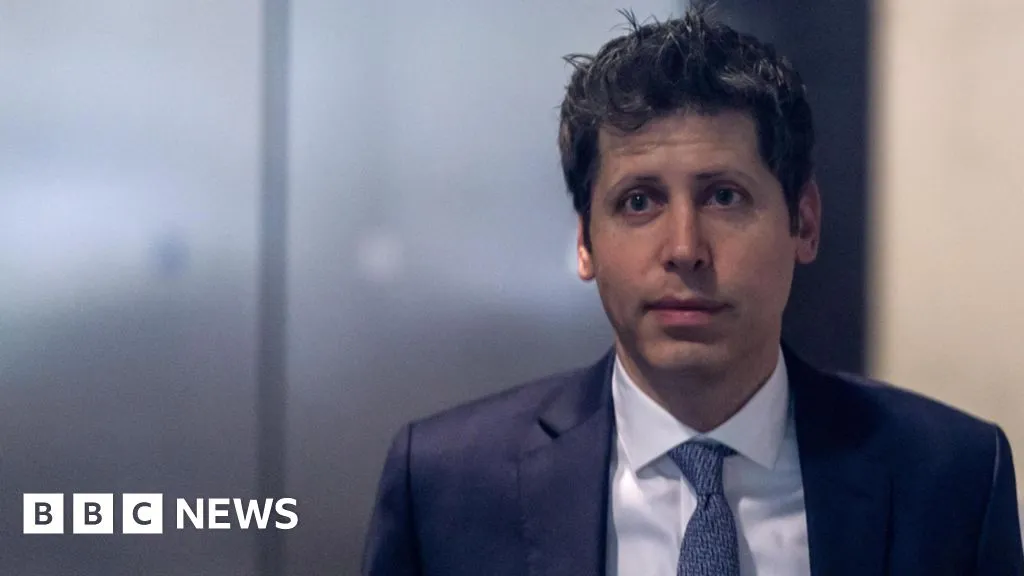
In a dramatic courtroom confrontation, OpenAI CEO Sam Altman testified that Elon Musk repeatedly sought to secure total control over the artificial intelligence pioneer, even suggesting that leadership should ultimately pass to his children. This revelation came during Altman's testimony before a federal jury in Oakland, California, as part of a lawsuit Musk has filed against him.
Altman, a co-founder of OpenAI, described how Musk not only endorsed the transformation of the organization from a non-profit to a for-profit entity but also expressed desires to tighten his grip on its operations. "A particularly hair-raising moment was when my co-founders asked, 'If you have control, what happens when you die?' He responded, 'Maybe it should pass to my children,'" Altman recounted.
Musk's ambitions for OpenAI emerged soon after its founding in 2015, and his insistence on acquiring greater control became clear as he sought additional seats on the board and even the CEO position. Altman reflected on Musk’s proposal to make OpenAI a subsidiary of Tesla, linking financial growth to Musk’s social media influence. "If I make one tweet about this, it’s instantly worth a ton," he recalled Musk stating.
Altman, along with co-founders Greg Brockman and Ilya Sutskever, ultimately resisted Musk's overtures, fearing that granting him the reins would undermine OpenAI's mission centered on developing artificial general intelligence (AGI). Their fundamental belief was that no single individual should wield such power over an initiative of this magnitude. Altman expressed profound discomfort with Musk’s desire for control, stating, "One of the reasons we started OpenAI was because we didn't think any one person should be in control of AGI."
The stakes are particularly high in this case, given that AGI is defined within the tech community as an AI system that can surpass human intelligence in most tasks. Musk, who distanced himself from OpenAI in early 2018, ceased his contributions of $5 million per quarter, voicing doubts via an email that became notable for its starkness. In it, he claimed OpenAI had "a zero percent chance, not a one percent chance, of success" without his involvement.
When Altman later offered Musk an opportunity to invest in OpenAI’s formation of a for-profit subsidiary in 2019, Musk rejected the proposal, citing a decision to not invest in any startups where he did not hold control. This feud between Musk and Altman, once aligned in the pursuit of advanced AI, underscores the complex dynamics of ambition, innovation, and oversight within the technology sector.
Source: BBC News
Source: BBC News - Business