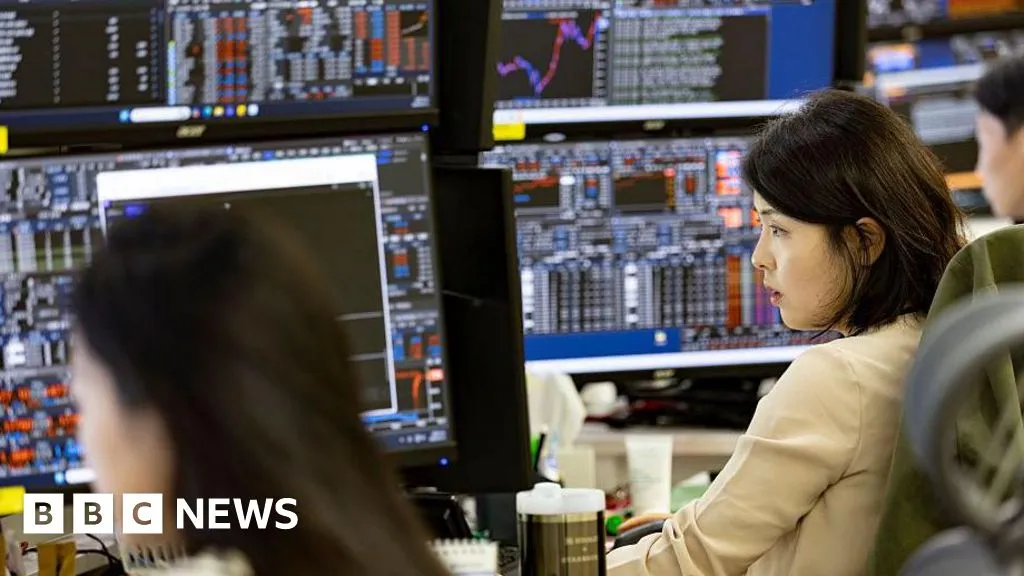
Global stock markets are reeling from a sharp downturn, propelled by a significant sell-off in technology shares and escalating military actions in the Middle East. In South Korea, a staggering plunge prompted a 20-minute trading halt, as the Kospi index plummeted nearly 9% before ultimately closing down 8.3%. Across Asia, the trend continued, with Japan’s Nikkei index reporting a decline of 3.8%, while European markets opened lower, absorbing the shock waves from across the Pacific.
The recent turbulence was fueled by rising oil prices, which surged after renewed clashes between Iran and Israel signaled a disturbing turn in regional stability following a tenuous ceasefire. Brent crude climbed 4.6% to $97.34 per barrel, raising inflationary concerns among traders already on edge from the heightened geopolitical tensions.
Experts describe the current market landscape as a "messy mix" of shocks, particularly from the technology sector, with Charu Chanana, chief investment strategist at Saxo, noting that investor sentiment has shifted drastically. "After weeks of robust gains, this repositioning comes in the face of fears that AI investments may be overbought," Chanana stated.
The Kospi's abrupt halt marks the third use of a circuit breaker this year—an attempt to curb panic selling amidst investor anxiety over tech stocks that have previously seen booming valuations. In the United States, the Nasdaq composite faced its largest drop in over a year, down approximately 4%, driven by similar fears of rising interest rates amid stubborn inflation and a healthier-than-expected job market.
European indices, such as Germany's DAX and the UK's FTSE 100, witnessed moderated losses, reflecting a more cautious atmosphere among investors. While stocks like Samsung and SK Hynix saw drastic declines—closing down 10% and experiencing heavy selling, respectively—South Korean President Lee Jae-myung expressed confidence that local markets remain "slightly undervalued" despite the volatility.
Investor strategies have shifted towards technology firms showcasing solid income streams. Susannah Streeter, chief investment strategist at Wealth Club, emphasized that the recent sell-off indicates an underlying concern regarding the sustainability of tech stock valuations. "There are undercurrents of worry about inflated tech stock prices, prompting a more cautious approach among investors," she noted.
Additionally, other Asian stock exchanges followed suit, with the Hang Seng Index and Shanghai Composite both closing lower, echoing fears echoed through the sector.
The geopolitical backdrop remains tense, with Tehran’s military actions described as a response to Israel's preemptive strikes, signaling a possible escalation in an already complex conflict. U.S. President Donald Trump acknowledged the precarious situation, stating, "We are very close to a final deal with Iran. I don’t want it to blow up because of what is happening now," in comments made to Axios.
As oil prices continue to fluctuate amid geopolitical strife and market uncertainties, experts stress that long-term impacts on global energy flows remain unpredictable until substantial diplomatic resolutions are reached. The unfolding events reiterate the intertwined nature of global markets and regional conflicts, leaving investors wary and seeking clarity in an increasingly chaotic environment.
Source: BBC News
Source: BBC News - Business