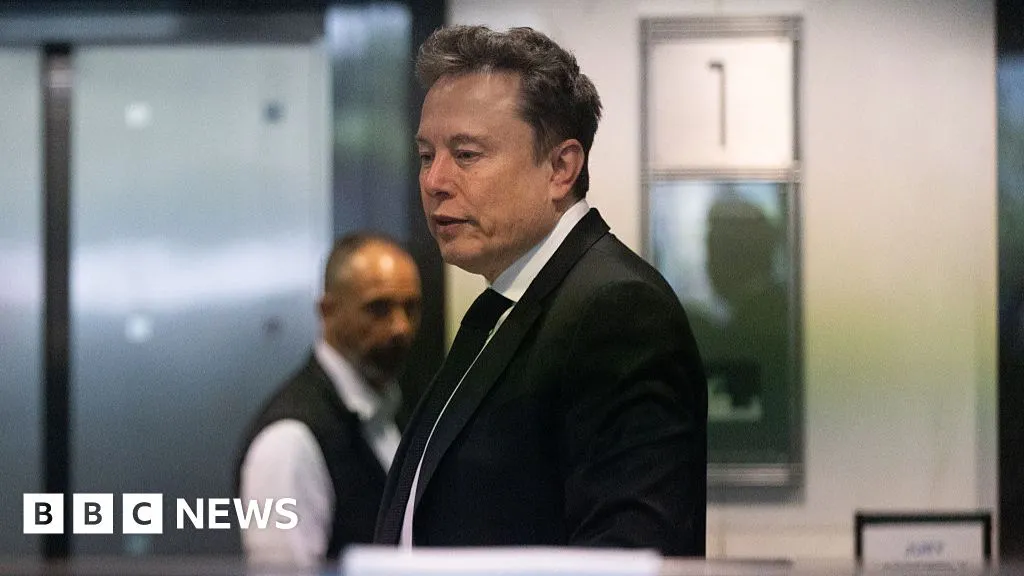
In a stunning legal defeat for Elon Musk, a California jury has unanimously dismissed his high-profile lawsuit against OpenAI and its CEO, Sam Altman. The jurors, after nearly a month of deliberations, determined that Musk's claims had aged beyond their legal validity, effectively ending the case.
Musk's allegations revolved around a purported breach of a charity agreement. He claimed that Altman manipulated the transformation of OpenAI—from a non-profit established in 2015 with lofty humanitarian aims to a lucrative for-profit venture—after Musk's significant $38 million investment early on. Musk asserted that Altman had misled him, undermining the original intent of OpenAI to develop artificial intelligence for the greater good.
The jury's deliberations on Monday were swift, lasting just two hours. However, this came after nearly three weeks of scrutinizing internal communications and hearing testimonies from industry giants, including Microsoft CEO Satya Nadella. The courtroom drama unfolded with Musk accusing Microsoft of colluding with OpenAI on its controversial transition to a profit-driven model.
Legal experts weighed in after the verdict, with Carl Tobias, a law professor at the University of Richmond, stating that the jury's decision was rooted in a careful examination of the facts. He remarked, "This case seemed kind of weird and crazy, but this is why we trust juries, because they bring the common sense of the community to resolve factual disputes."
During the trial's proceedings, Musk, dressed in a dark suit, expressed his belief that the erosion of charitable principles was at stake. "It’s not OK to steal a charity... If it’s okay to loot a charity, then the entire foundation of charitable giving will be destroyed," he asserted. However, Altman countered during his testimony by revealing that Musk not only supported OpenAI's transition but had also sought control of the organization, leading to tensions that have simmered since Musk's departure in 2018.
As the trial unfolded, tensions highlighted the ongoing rivalry between Musk and Altman, particularly as Altman's stature grew with the meteoric rise of ChatGPT. In response to Musk's public criticisms, OpenAI previously published a detailed timeline to clarify the company's history.
Following the verdict, OpenAI spokesperson Sam Singer hailed the ruling as a "tremendous victory," asserting that Musk's legal pursuits were merely an attempt to hinder competition. Lawyer William Savitt, who represented OpenAI, dismissed Musk’s claims as bearing "no relationship with reality," expressing contentment with the jury's prompt conclusion.
Despite the dismissal, Musk's lead attorney, Steven Molo, signaled intentions to appeal, opening the door for potential extended legal disputes. Legal analysts predict that an appeal may prove challenging, given the specificity of the jury's findings.
Tobias noted, "The bottom line is that an appeals court would be very unlikely to overturn such a fact-specific decision from a jury, and a judge who agreed with it.” With this landmark ruling, the tech community remains watchful as it reflects on the intertwining narratives of ambition, rivalry, and the evolution of artificial intelligence.
Source: BBC News
Source: BBC News - Business