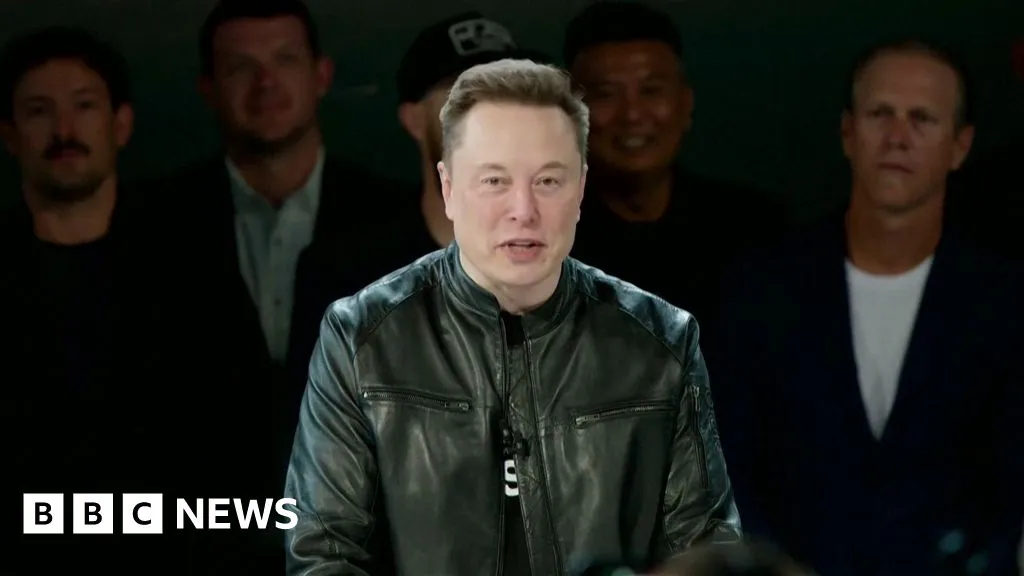
In a groundbreaking moment that reshapes the landscape of global finance, Elon Musk has officially become the world’s first trillionaire, with a staggering net worth of $1.11 trillion. This remarkable milestone follows the historic stock market debut of his aerospace venture, SpaceX, which launched on the Nasdaq with a valuation of $2.2 trillion, cementing Musk's status as an economic powerhouse.
On Friday, SpaceX shares opened at $150, surpassing their initial offering price of $135 and briefly soaring to an impressive $176.50, fueled by investor enthusiasm surrounding Musk's ambitious plans for space exploration and technological advancement. The stock ultimately closed at approximately $161, completing a meteoric rise that raised $75 billion from investors prior to hitting the open market.
Musk’s commanding 42% stake in SpaceX grants him substantial control over the company's trajectory. With his shares valued at roughly $767 billion, compounded by $168 billion in Tesla holdings, and further stock options, his wealth reaches unparalleled heights. Nonetheless, the new trillionaire's wealth is primarily paper-based, tied closely to the fluctuating stock values, and he faces a one-year lockup period that prevents him from cashing in his SpaceX shares.
Global Reactions: A Divisive New Era of Wealth
The news of Musk’s astonishing financial ascent has ignited fervent discussions about wealth inequality, drawing criticism from public figures including Democratic Senators Bernie Sanders and Elizabeth Warren. Warren described Musk's unprecedented fortune as a "wake-up call" for the nation, echoing calls for wealth taxes amidst growing disparities that mirror the GDP of entire nations.
As Musk's notoriety intensifies, so does his influential status in geopolitical matters. His recent donations to re-election efforts for former President Donald Trump and his controversial decisions in government positions—including severe budget cuts that could affect public health—underscore Musk's polarizing influence. Critics have voiced their concerns about the socio-economic implications of such concentrated wealth, with experts warning of dire consequences stemming from policy shifts.
SpaceX's Financial Landscape: A Fragile Ambition
While the market excitement around SpaceX is palpable, the company is not yet profitable, logging losses exceeding $9 billion in 2025 and early 2026 due to substantial expenditures on innovation and infrastructure. Musk’s ventures into AI, including a recent acquisition meant to bolster his data capabilities in orbit, have drawn scrutiny as some analysts label these initiatives as "cash incinerators." Nancy Tengler, CEO of Laffer Tengler Investments, emphasized the importance of a long-term perspective when evaluating SpaceX’s ambitious plans.
Despite the hurdles, Tengler believes in the potential of SpaceX, noting, "Our investment horizon is three, five, and even ten years," highlighting the optimism that pervades the investors’ landscape.
As SpaceX charts its path forward, millions of employees and investors eagerly anticipate how this historic debut will influence not just their stock portfolios, but the future of technology and space exploration. With Musk leading the charge, the world watches closely, caught between wonder and concern as one individual redefines the limits of wealth.
Source: BBC News
Source: BBC News - Business